


Interchangeable Lenses for Video:
The Real Advantages, and How to Choose Your Lens
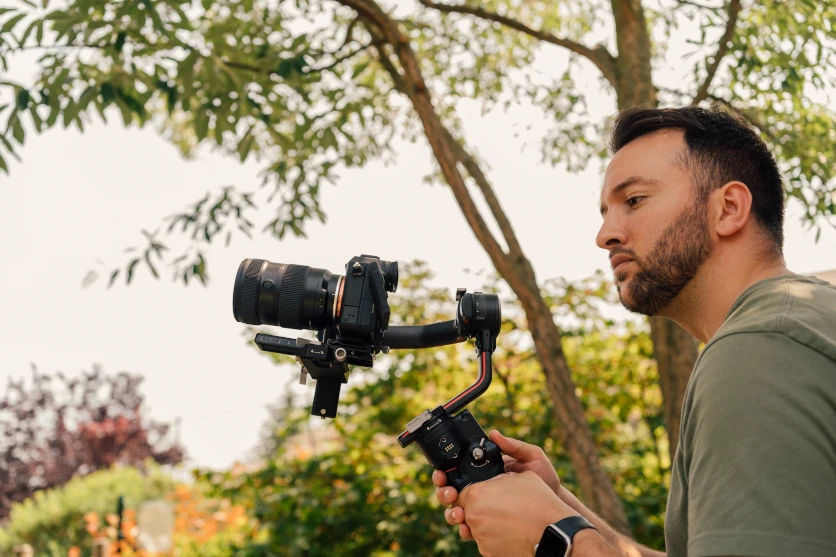
Most people shoot video on whatever’s already in their pocket. That’s fine, until you want more control over how the shot actually looks; depth, colour, low-light performance, the kind of separation between subject and background that makes footage feel considered rather than accidental. That’s where an interchangeable lens camera earns its keep. You’re not locked into one lens, one sensor size, or one aperture; you’re building a system that can flex to whatever you’re shooting.
One thing worth checking before you get carried away: some older camera bodies still cap continuous recording at around 30 minutes. If you’re planning long-form or event work, confirm your body’s recording limits before you commit to it as your main video rig.
Why Shoot Video on an Interchangeable Lens Camera
A system, not just a camera
The real advantage isn’t the camera body: it’s everything you can attach to it. Filters, gimbals, external microphones, and a genuinely wide lens selection mean you’re building toward a proper production setup rather than working around the limitations of a fixed lens and a built-in mic. A gimbal smooths out your movement, an external mic gets your audio out of “recorded on a phone” territory, and the right filter controls exposure and reflections in ways software can’t fully fix afterward.
Range that a fixed lens can’t match
Primes, zooms, wide angles, long telephotos: swapping lenses to suit the scene is the whole point of the system. A wide zoom keeps a run-and-gun documentary style flexible; a fast telephoto compresses a background into something painterly. You’re choosing the look per shot instead of accepting whatever field of view you were given.
Bokeh you can’t fake convincingly
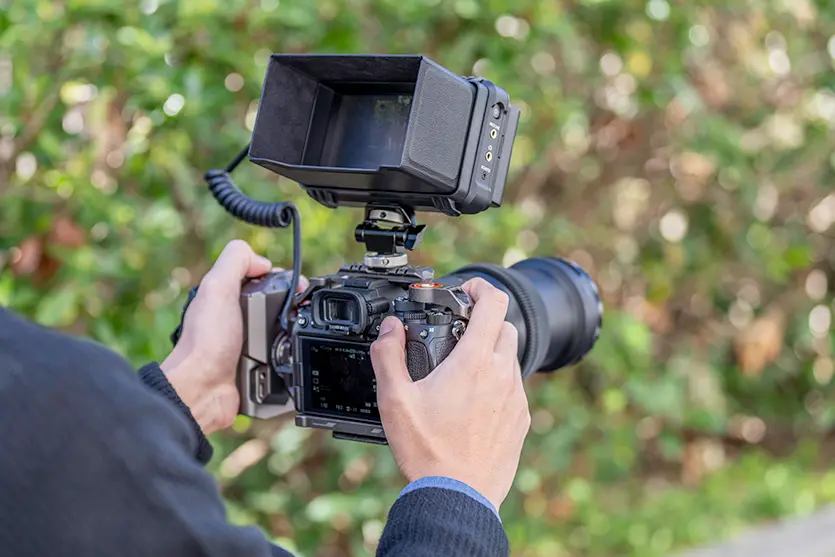
Software-simulated background blur has come a long way, but it still can’t replicate what a genuinely fast lens does optically. Real bokeh from a wide-aperture lens separates your subject from the background with a falloff that looks natural because it is natural. No edge detection artefacts, no hair turning to mush around the frame. It’s the difference between footage that reads as cinematic and footage that reads as “shot on a phone, cleaned up in an app.”
Control that actually changes the image
Aperture, frame rate, ISO, white balance; on an interchangeable lens camera these are yours to set deliberately, not auto-managed in the background. Shooting Log or RAW video opens up proper colour grading later, and a lower F-number gives you both extra light and extra bokeh in the same move. None of this is available if the camera’s making all the decisions for you.
Genuinely usable low light
Larger sensors gather more light than anything built into a phone or a compact camcorder, so you get cleaner, brighter footage after dark without resorting to visible noise or artificial-looking gain. Wider dynamic range also means the gap between your brightest highlights and darkest shadows holds together instead of blowing out or crushing… Footage that looks like what you actually saw, rather than a compressed approximation of it.
Where This Actually Matters: Scenes Worth Shooting This Way
Cinematic and short-form work
This is where an interchangeable lens camera separates itself completely. A large sensor paired with a fast lens gives you the shallow depth of field and colour flexibility that cinematic work depends on. Shoot in Log, grade it properly in post, and dial in your frame rate for intentional motion blur. This is the workflow that turns a run-and-gun clip into something that looks graded and considered rather than shot on the fly.
Vlogging, done properly
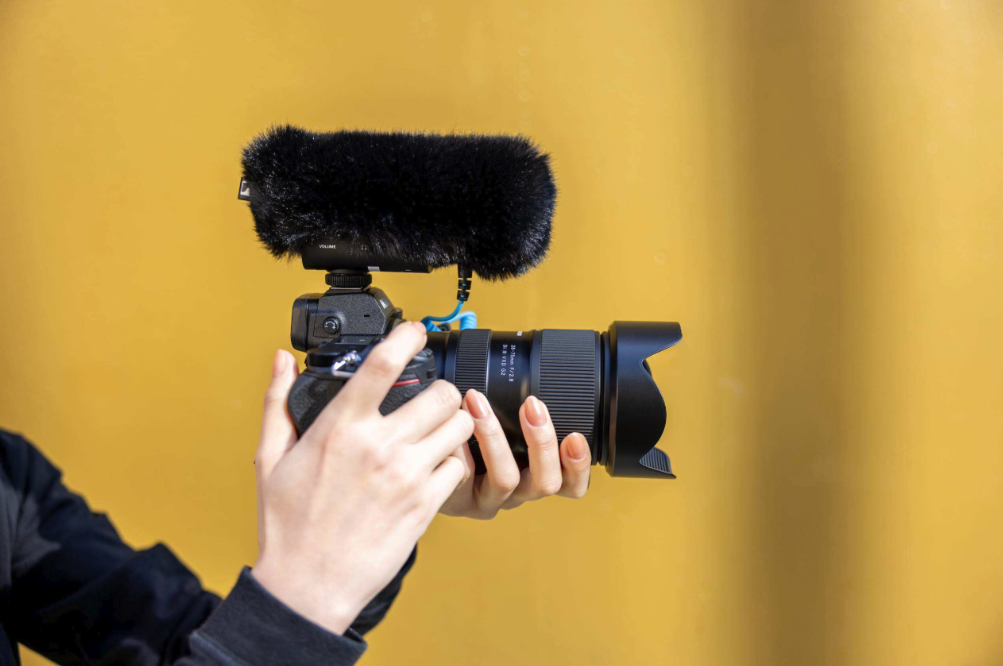
Background separation is the whole trick here. A soft, out-of-focus background behind you reads as professional immediately, and it works just as well for everyday content – pets, kids, cooking, day-in-the-life stuff – as it does for scripted pieces. It’s the fastest way to lift a vlog out of “talking into a phone” territory.
Weddings and milestone events
Chapels and reception venues are frequently dim, and flash or continuous lighting is often restricted or outright banned. A camera with a larger sensor handles this without a fight; you get a properly exposed frame in conditions that would otherwise force you to either underexpose or break the venue’s rules. Add the flexibility to shoot wide-angle establishing shots and tight telephoto reactions from the same kit, and you’ve got the range to capture a day that only happens once.
Travel
A wide-angle lens turns a landscape into something with actual scale and depth, while background blur on the people in your shot gives travel footage a sense of intimacy that a flat, everything-in-focus frame doesn’t have. This is the combination that makes travel video feel like more than a highlight reel – it feels like a place you were actually in.
Sport and junior sport
An all-in-one zoom is the practical choice here. The ability to go from a wide establishing shot to a tight zoom on the action, without swapping lenses mid-game, is what makes this workable in real time. Cut between your wide and tight footage in the edit and you get pace and rhythm that a single fixed angle simply can’t produce.
Interviews and portraits
Genuine optical bokeh does more work in an interview than most people give it credit for. It’s the difference between a subject who’s clearly the focus of the frame and one who’s competing with their background. A fast prime or a constant-aperture zoom gets you there without digital fakery.
Choosing a Lens for Video: What Actually Matters
Maximum Aperture
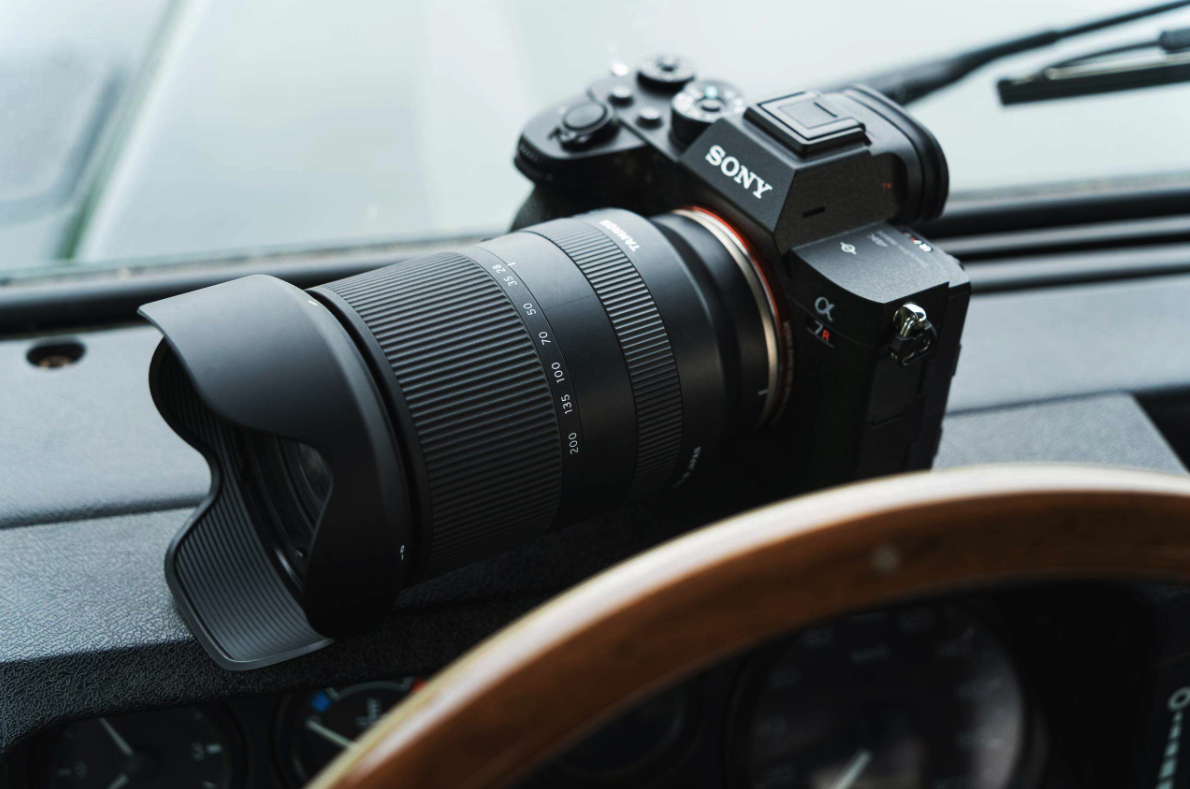
A wide maximum aperture (small F-number) buys you two things at once: more light in dim conditions, and more background separation. If you’re shooting indoors, at dusk, or under overcast skies more often than not, this is the spec to prioritise over almost anything else. It’s the reasoning behind constant-aperture Tamron zooms like the 16-30mm F/2.8, and the 35-100mm F/2.8. A fast, fixed F-number across the whole zoom range instead of one that narrows as you zoom in.
Colour and Rendering: the “Look.”
Two lenses with near-identical specs can still produce noticeably different footage once you factor in colour rendering, contrast, and how each one handles out-of-focus areas. If consistency across a multi-lens kit matters to you — and for video work, it usually does — sticking with lenses from the same manufacturer makes colour matching in post considerably less painful. Tamron’s mirrorless lenses share coatings and colour characteristics across the range for exactly this reason, so cutting between two Tamron lenses mid-project needs less correction than cutting between mismatched brands.
Focus Breathing
This is the shift in field of view that happens as focus is pulled – distracting in stills, genuinely disruptive in video, where focus changes mid-shot are common. Test any lens you’re considering for this specifically before committing to it for video work; it’s not something you can easily grade or fix afterward. Tamron lenses such as the 17-70mm F/2.8 are engineered to suppress focus breathing – paired with Vibration Compensation (VC) specifically optimised for video shooting, and an extremely quiet AF system, the 17-70mm is a great choice for videographers of all levels.
Axis shift and Focus Shift on Zooms
Axis shift is when the optical axis drifts between the wide and telephoto ends of a zoom; focus shift is when the point of focus moves as you adjust focal length. Both are worth checking before you buy, particularly if you plan to zoom mid-shot rather than only between takes.
Autofocus Behaviour
Beyond tracking accuracy, pay attention to how audible the AF motor is. A lens that hunts loudly will show up in your audio track unless you’re recording sound separately. Smooth, quiet, confident focus pulls matter more for video than raw AF speed does. This is where Tamron’s VXD (Voice-coil eXtreme-torque Drive) linear motor earns its keep — it’s built for fast, precise focus with minimal noise, which matters as much for what your microphone picks up as for what the lens locks onto.
Vibration Compensation
Handheld shooting and longer focal lengths both amplify camera shake, so built-in VC is worth having if you’re not shooting from a gimbal or tripod for everything. Tamron’s VC system is built into lenses like the 50-400mm F4.5-6.3 specifically for this kind of handheld, longer-reach work.
Weather Sealing
Video work tends to happen outdoors more often than stills – travel, events, sport – so moisture-resistant construction isn’t a nice-to-have, it’s what lets you keep shooting when the weather turns. Tamron builds moisture-resistant construction into its mirrorless lens lineup as standard, along with a fluorine coating on the front element to shed water, dust, and fingerprints.
Handling
An accessible AF/MF switch, a focus ring with genuinely smooth, predictable resistance, and a zoom ring you can operate confidently without looking — these are the details that separate a lens you enjoy using from one you tolerate. Tamron also standardises filter thread sizes across much of its mirrorless range, which is a small thing until you’re swapping lenses mid-shoot and don’t want to carry three sets of filters.
Weight and Size
If you’re moving while you shoot (and most video work involves moving while you shoot!) a lighter, more compact lens keeps you agile instead of fighting the kit for every angle. Keeping the kit light without giving up a fast aperture is a big part of what Tamron’s mirrorless range is built around, and it’s worth weighing up against bulkier native alternatives when you’re comparing options.
Lenses Worth Considering
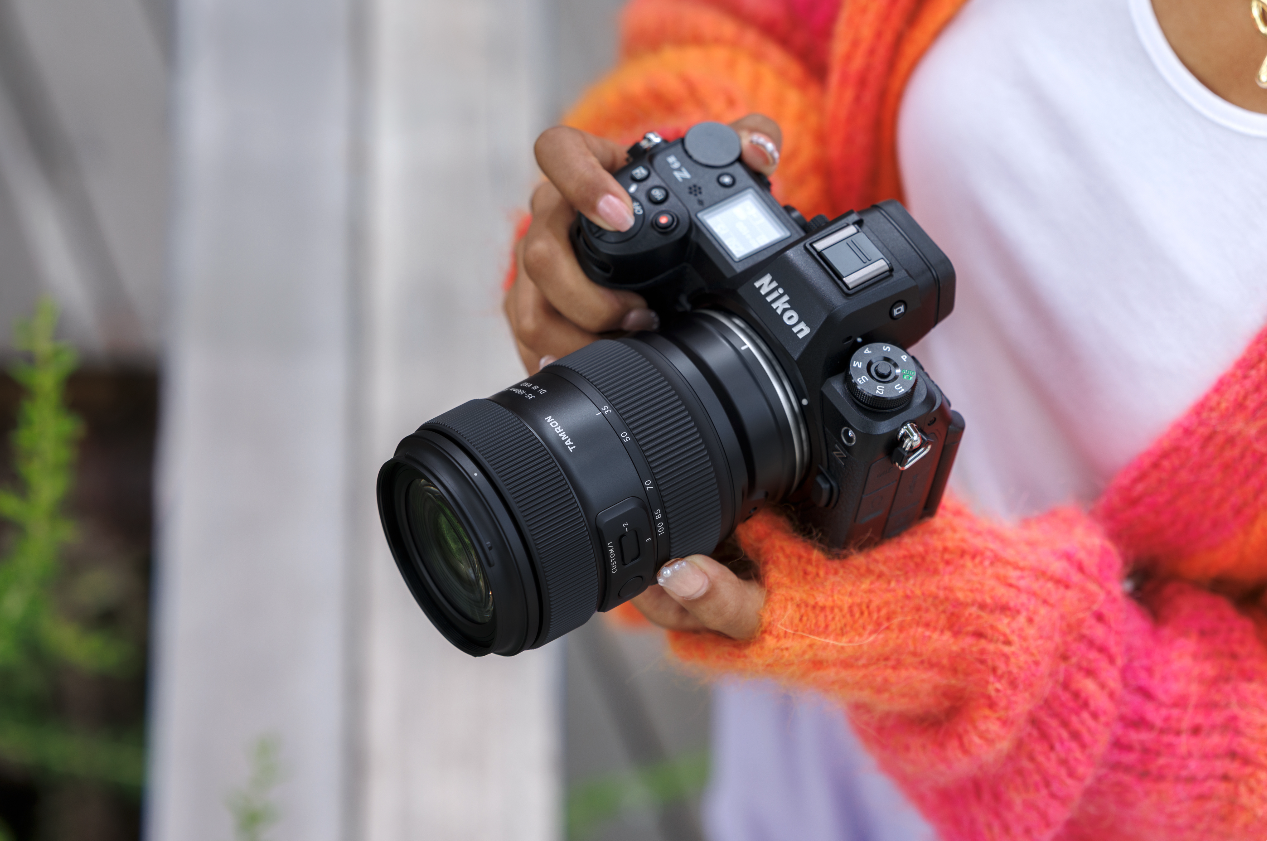
Tamron 35-100mm F/2.8
Tamron’s mirrorless range has a genuine claim on video work, and the newest additions make that case even more directly. For Sony Eand Nikon Z, the 35-100mm F2.8 Di III VXD is one of the more useful recent additions — a constant f/2.8 zoom built around the most-used focal lengths for portrait and event work, compact enough to carry all day, and paired with Tamron’s VXD linear motor for autofocus that’s fast and notably quiet – a genuine advantage when you’re recording audio in-camera.
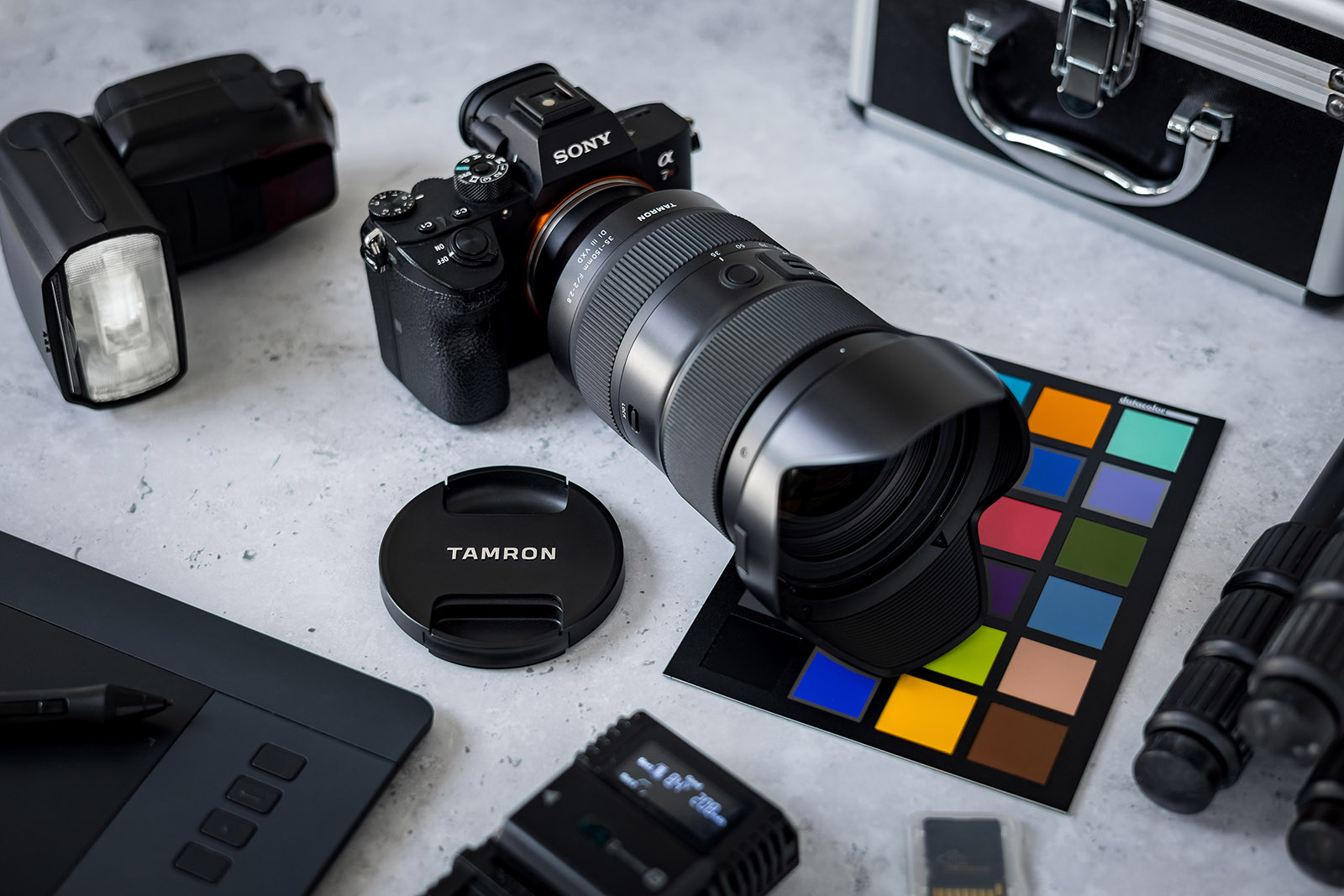
Tamron 35-150mm F/2-2.8
If you need more reach in the same fast-aperture territory, the 35-150mm F2-2.8 Di III VXD covers a wider range at the cost of some extra size and weight.
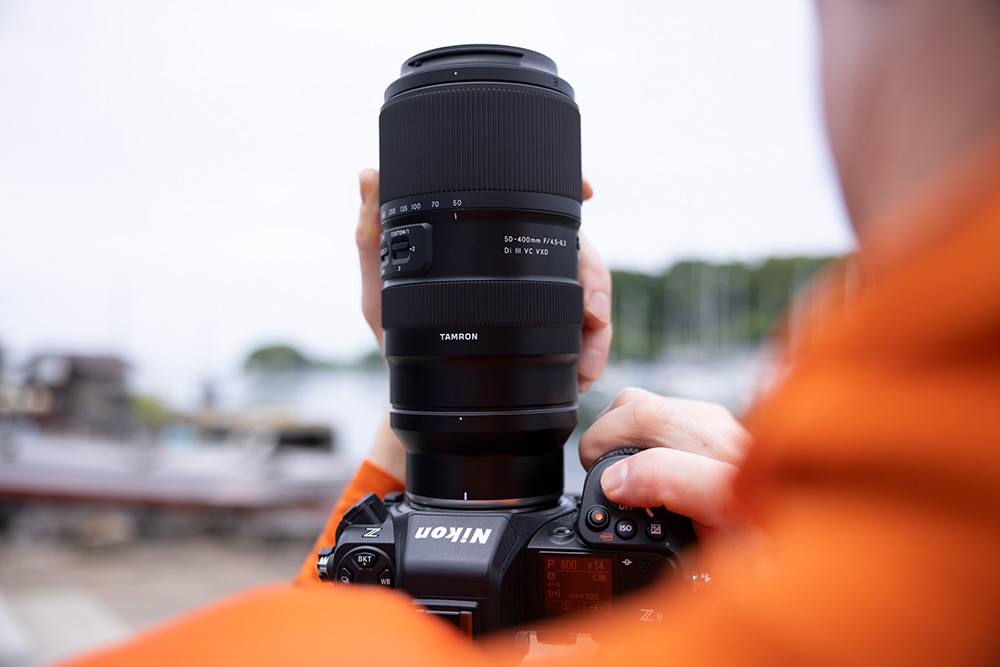
Tamron 50-400mm F4.5-6.3 Di III VC VXD
For events and sport where you need to go from wide to properly long without a lens change, the 50-400mm F4.5-6.3 Di III VC VXD (Sony E) adds built-in Vibration Compensation, which matters more for handheld video than it does for stills.


Tamron 17-50mm F/4 Di III VXD or
Tamron 20-40mm F/2.8 Di III VXD
If you’re building a lighter vlogging or run-and-gun kit, a wide-angle zoom such as the 17-50mm F4 Di III VXD or 20-40mm F2.8 Di III VXD keeps things compact while still giving you the aperture and field of view that background separation and low-light shooting depend on.
Tamron Newsletter
Whichever mount you’re on, check current availability across Sony E, Nikon Z, Fujifilm X, and Canon RF before you buy. Our lineup has been expanding across mounts quickly, so keep up to date via our newsletter to be the first to know about what’s coming up next.
Be the first to know about future events; get the latest updates as they happen.
Getting More from Tamron Lens Utility
Tamron Lens Utility adds a layer of control that goes well beyond what the lens does on its own, and it’s worth setting up regardless of which lens you land on. Run from your phone or computer, it puts functions that used to require dedicated video equipment directly into your existing kit.
Focus (FC) / Iris Marker Link
Lets you set markers on the focus and aperture rings and jump straight to them from your phone via the Digital Follow Focus screen – a proper focus-pull workflow without a separate follow-focus rig.
Focus Time Lapse
Focus Time Lapse adds a gradually shifting focus position to interval shooting, useful for time-lapse work with a deliberate focus pull built in.
Focus Limiter
Restricts the focus range so a moving subject doesn’t send the lens hunting through its entire range. Genuinely useful for anything unpredictable, from kids to pets to sport.
MF Method
MF Method changes how manual focus responds to your input. Linear ties focus movement directly to how far you turn the ring, which is what you want for deliberate, repeatable video focus pulls, and you can set the rotation angle to suit how fine you need the adjustment to be.
Select AF/MF
Select AF/MF gives you an AF/MF toggle via the focus set button on lenses that don’t have a dedicated physical switch – handy if you’re working with an older or more compact body.
Where This Leaves You
None of this replaces good technique, but it does remove the technical ceiling that a phone or fixed-lens camcorder eventually runs into. Bokeh, low-light performance, colour control, the ability to match a lens to a scene rather than the other way around… An interchangeable lens system gives you the range to make those calls deliberately, shot by shot, rather than accepting whatever the camera decides for you.
