


Jasin Boland: Action & Stunt Photography Master | Get The Shot Ep. 6
Watch the full episode here:
Episode Overview: Shooting Stunts and Blockbusters
 Boland’s lens has witnessed the heart-pounding action of franchises like Mad Max, James Bond, Mission Impossible, and Marvel, often from the very centre of the action. He shares stories of working with industry titans Chris Hemsworth, Tom Cruise, Keanu Reeves, and reveals the technique, bravery, and instinct that define his craft. From negotiating space with stunt teams to composing photos in split-second situations where even a slight move could make or break the shot, Jason’s experience is a masterclass in both technical skill and creative nerve.
A relaxed, honest look at the world behind some of cinema’s wildest moments. Tune in for some great anecdotes, practical tips, and a window into a part of the film industry most people never get to see. Thanks Jasin!
Jasin Boland’s Techniques for Action & Stunt Photography
Jasin details his unique approach to covering a film set, balancing the need to create both promotional assets and standalone works of art.
- Storytelling Style: Jasin explains that his photography is an extension of the film, but he doesn’t try to copy the director’s style directly. Instead, he focuses on “storytelling the director’s storytelling” by capturing the environment and the process from the “perimeters” [02:50].
- Finding Calm in Chaos: To maintain focus amidst major action sequences, Jasin uses a set of mala beads on his camera strap, rolling them between his fingers to zone out and find stillness. He sees himself as a “washer” that allows the “cogs in the wheel” of the production to turn around him [07:13].
- The Power of Remote Rigs: For massive action scenes like the James Bond car chase or Furiosa, Jasin runs extensive remote camera rigs alongside his physical camera. He had five cameras set up for a famous ‘donut’ shot on a James Bond set [08:29].
- The Most Insane Shot: Jasin describes his most difficult and memorable shot from Extraction 2, where he was standing on top of a train moving at 80 km/h as a stuntman jumped from a helicopter. He resisted the instinct to zoom, keeping the frame wide to capture the “insane” context, including the helicopter’s tail rotor just a few meters away [22:16].
Behind the Scenes of Blockbusters: Trust, Safety, and CGI
Access and safety are paramount in Jasin’s work, especially when dealing with high-risk stunts and complex visual effects.
- Earning Access: Jasin emphasizes that his access is a gift granted by the crew. Before positioning himself for an action shot, he follows a complex protocol, getting sign-offs from the stunt department, special effects, the safety officer, and the first assistant director. He builds trust by staying exactly where he says he will be [06:07].
- Safety First: He notes that he feels “safer on a film set than at home” due to the constant presence of paramedics and nurses. Safety officers and stunt teams ensure that all procedures are meticulously planned [12:44].
- Relationship with Chris Hemsworth: Jasin highlights Chris Hemsworth and Matt Damon as the most loyal people he’s worked with, noting that Hemsworth does everything in his power to keep his core team, including Jasin, on his films [15:03].
- Photographing CGI:
- For motion capture (mocap) films like Planet of the Apes, he went to “ape school” with the actors and photographed them as if they were real apes [16:40].
- For creature features like Jurassic World, he focuses on the human actor’s reaction to the CGI element (like a dinosaur) because that is the reality he is meant to capture [18:19].
Essential Gear and the Power of Primes
Jasin travels with approximately 100 kg of gear, taking everything he might need for the shot, even if he only uses it once or twice [25:20].
- Day Pack Gear: His Think Tank day pack includes his Nikon Z9 cameras mounted with essential zooms: the 24-70mm f/2.8, the 70-200mm f/2.8, and the 24-120mm f/4 [25:43].
- Low Light Primes: For low-light scenes, he uses Pelican Air cases packed with Nikon Z9 bodies and his suite of fast Nikon prime lenses (35mm f/1.2, 50mm f/1.2, 85mm f/1.2, and the 135mm Plena) [27:00].
- Aperture Choice: Despite owning these super-fast lenses, he notes that he rarely shoots above f/2 because his photography is governed by the need for the highest possible shutter speed to freeze action [28:03].
- The Best Crash Camera: Jasin demonstrates the extreme conditions his gear faces by showing a Nikon Z6 II that was hit by a vehicle on set, jokingly calling it the “best crash camera on the planet” [11:37].
Lessons on Success, Failure, and the Manual Setting
Jasin shares philosophical insights on his career progression and offers his number one tip for photography enthusiasts.
- Success Through Failure: He strongly believes that “success only comes from failure.” He cites being kicked out of photography school and fired from his first film job as key failures that pushed him to become a unit photographer [32:27].
- Refinement: After decades in the industry, Jasin states he is no longer learning new techniques, but rather dedicating his time to the “refinement of my style” [30:19].
- Tip for Enthusiasts: Shoot Manual: Jasin’s ultimate tip is to always shoot manual. He encourages enthusiasts to use their eyes and the EVF on modern mirrorless cameras to control the exposure, stating, “You’re going to learn more in a week shooting every day on manual than what you will in a year shooting on aperture priority or shutter priority” [33:54].
“From the last Extraction, we were shooting in Czech Republic and there’s a helicopter shot I did: I’m standing on top of a train, and the helicopter came in.
All these guys are jumping out, getting off, and then Fred North (the pilot) banks the chopper to get out. There was one more guy left, Chilly Palmer, and he’s jumped – midair – between the chopper and the roof of the train while the train’s doing 80 km an hour. It was like everything just froze in time.
My instinct was to zoom in on Chilly as he was jumping, but something in my head just said, ‘No, hold it.’ So I kept it full frame. The tail rotor was maybe 3 meters away from me. I was totally safe, all protected, but it’s an insane shot. It could have been ruined if I’d gone for the action close-up, but the way it turned out captures the moment perfectly.”
– Jasin Boland

Jasin Boland is a Global Motion Picture Still Photographer who works on massive action franchises such as Jurassic World, the Matrix, Bond & Mad Max: Fury Road. Jasin’s work has been published in newspapers, magazines, billboards, and movie posters all around the world and he always looks to capture the raw emotion of a scene. One of Jasin’s career highlights is becoming a Member of The Society of Motion Picture Still Photographers.
Jasin believes the enthusiast is the heart of photography and is always looking for ways to help the aspirations of others, After all, it was the support from fantastic photographers when he was young that developed his love of photography and propelled his career.
Q&A
Q: Jasin Boland, do you see your stills and photos as extensions of the film, or as standalone pieces of art?
A: Actually, they’re probably both. On a film set, I treat the environment as very real. I don’t think I’m a war boy, but I work like one. One of the producers, Doug, calls me “the eye of the desert.” Sometimes, it’s not out of the realms of reality to imagine there could have been a film camera found and chemicals for processing. So, everything I see is very real. My photos are standalone, but they’re also part of the process. When I make photographs on a film set, I don’t try to copy the director’s style directly. I focus on storytelling, following the environment the director has created. I work more along the perimeters, rather than inside the director’s head.
Q: What would a day on set be like for you, Jason? Sometimes it’s Mad Max in the desert, or Thor in a big studio – what’s your typical day like?
A: A day on set is about looking at what we’re shooting straight away. I like to stay active, but that doesn’t mean I’m on set the whole time. Sometimes I’m editing, taking my mind away so it’s free when I step into what I’m shooting. I start the morning by coming in, sussing out what’s going on, then get on my computer and work on the previous day’s edits. When I need certain elements, I’ll be on set. I don’t shoot every single take, especially for dramatic scenes, I get my work done and get out, letting the actors do their thing.
On-set still photography is all about access. It’s not about what we create for ourselves, but what everyone else on set allows us to have. I get cozy with the crew, sometimes right next to the camera, sometimes nowhere near it. They trust me not to distract or bump them (and sometimes I do), but it’s never intentional. It’s all about real estate and creating access.
Q: How does Jason gain trust and access on busy film sets with large crews?
A: It’s about being user-friendly and understanding that on a film set, camera comes first, sound second, stills third. If I can’t be there, I can’t be there. For big action scenes, I go to the stunt department first, ask permission, sometimes get mounted on the front of a vehicle doing 100 miles an hour! I need permission from the driver, the stunt department, the safety officer, and the first assistant director. I clear everything, stay in my spot, and that gives them trust that I’ll stay safe.
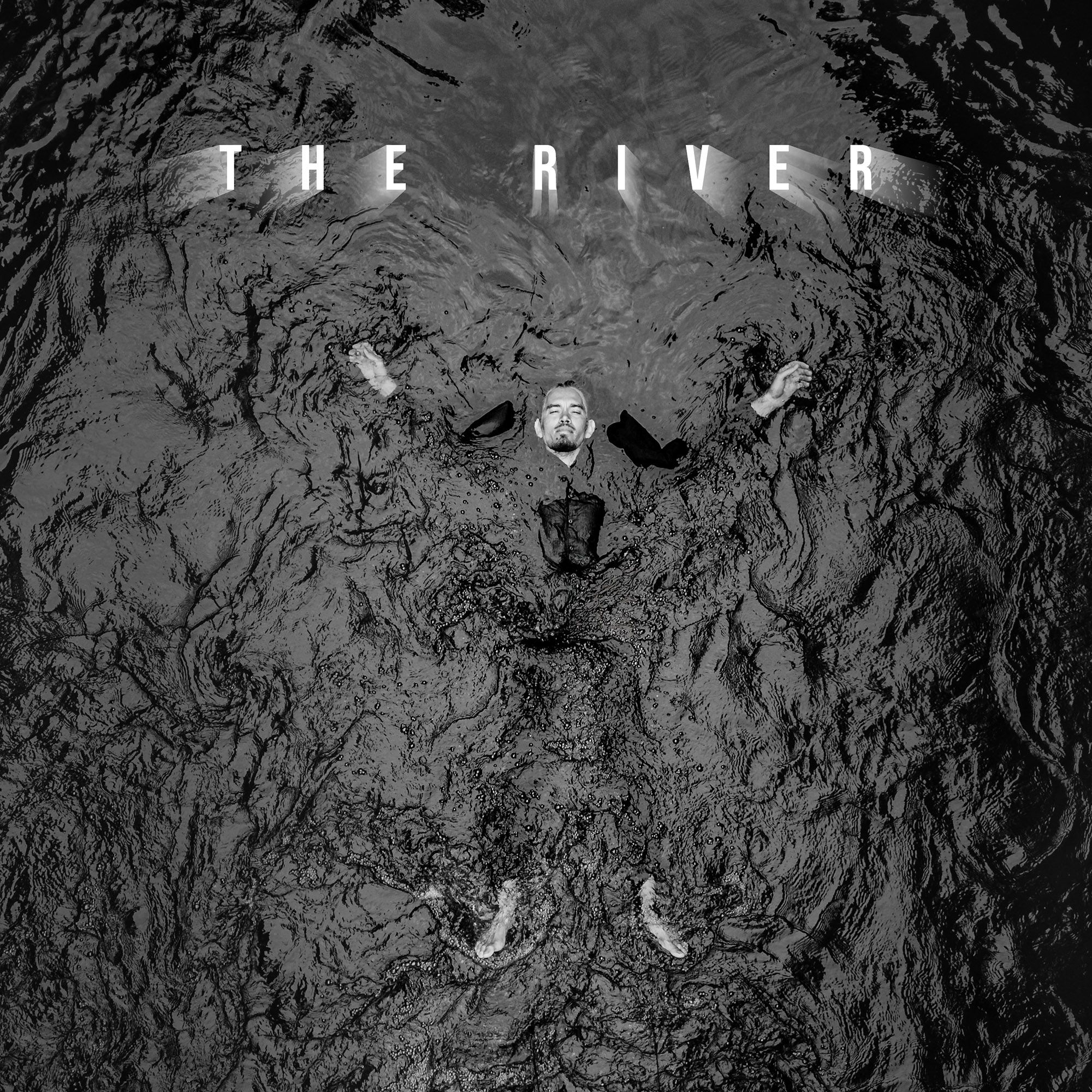
Human Puppet – Harley Brown
Drone? Check. Velvet suit? Check. Handsome musician? Check. Was it bloody cold in the water? Oh, uh, check! Did the current of the river move way too quickly for us to be able to communicate and ready the drone? Oh boy… Check.
Get The Shot STORIES read more
It’s not always about the gear.
Sometimes it’s the mud, the missed turns, the 4am call times or the conversations that happen in between. The moments behind the shot are often just as powerful as the image itself.
In this series, we speak with photographers from all walks of life about the stories behind their work; the behind-the-scenes chaos, the spontaneous camera rigs held together with tape, the interactions with strangers, and everything that got them there. Sometimes you gotta go out of your way to get the shot.
